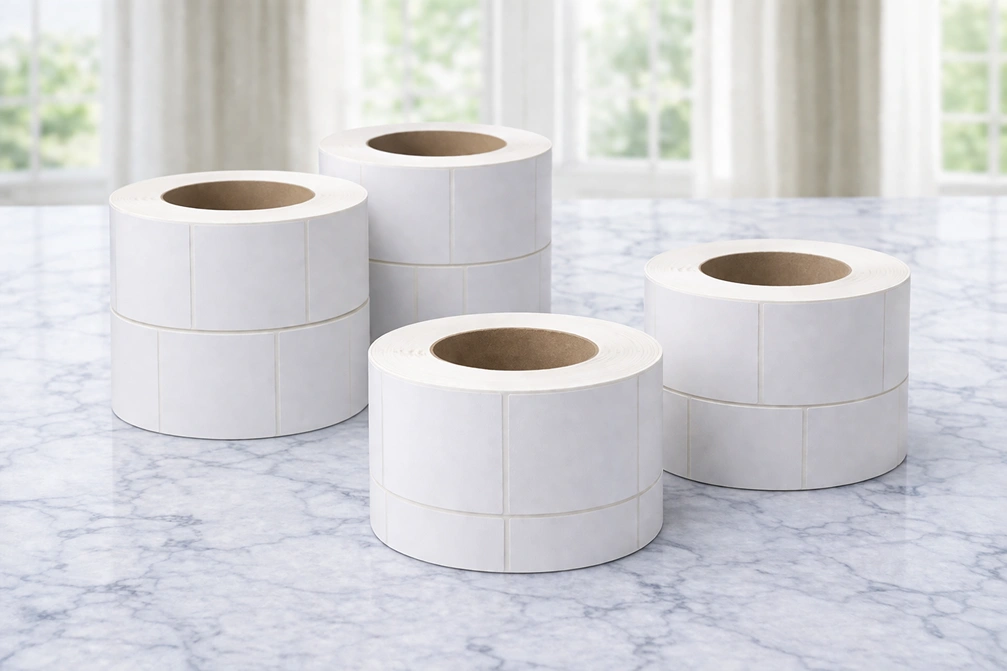
Roll labels are a type of adhesive label wound in a reel format for use in labeling machines. They are integrated into high-speed production lines with automated labeling systems. It is the most commonly used label format in the food, pharmaceutical, cosmetics, and logistics industries.
In roll label production, the first step is printing onto the selected material (coated paper, PP, PE, polyester). Then, the labels are cut to the desired size and shape. Finally, the labels are wound into rolls and delivered to labeling machines with the appropriate inner diameter.
| Format | Explanation | The sector where it is most commonly used. |
|---|---|---|
| Standard Roll | Single-sided adhesive, in roll format. | Food, cosmetics, pharmaceuticals |
| OPP Wrap Around | Roll label that completely surrounds the bottle | Water bottle, beverage |
| Thermal Roll | Unprinted roll used with thermal printers. | Logistics, warehousing, cargo |
| Peel-Off Roller | Resealable multi-layer roll labels | Medicine, multilingual packaging. |
No. The labeling machine's reel inner diameter, winding direction, and sensor type must be compatible with the roll label specifications. It is recommended that you share the machine specifications with your label manufacturer before placing an order.
Minimum order quantities vary depending on the printing method and materials. Low-volume roll label orders are possible for digital printing. Please contact us for more detailed information.
Roll labels are used in automatic labeling machines and are ideal for high-speed production lines. Sheet labels, on the other hand, are used manually or in semi-automatic systems. For mass production, roll labels are much more efficient.
The number of labels per roll varies depending on the label size and reel diameter. Smaller labels can have thousands of labels on a roll, while larger labels have a lower number.
At Doğa Barcode Label, we produce roll labels in coated paper, PP, PE, and polyester materials. We offer custom roll format, inner diameter, and winding direction options according to the technical specifications of your labeling machine. You can review our adhesive label page or contact us to get a quote.
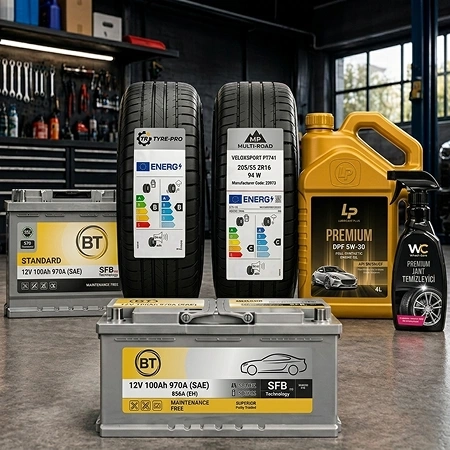
In the automotive industry, label selection is based on requirements such as high temperature resistance, chemical contact resistance, UV resistance, and longevity. Labels for lubricants, tires, batteries, and spare parts, unlike standard labels, must be produced with special materials and adhesives that are resistant to harsh conditions.

Material selection for detergent and cosmetic labels is determined by chemical resistance, moisture resistance, surface compatibility, and aesthetic requirements. Incorrect material selection can lead to label fading, peeling, or falling off the packaging. PP, PE, and polyester are the most commonly preferred materials.
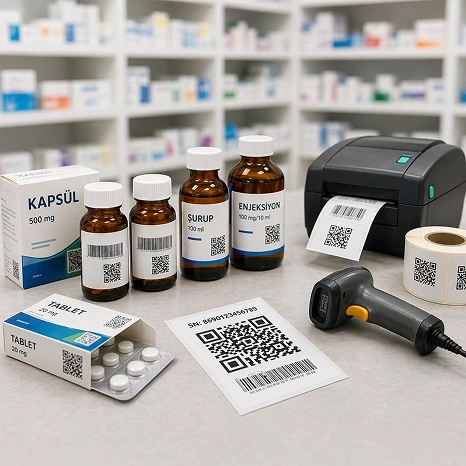
Traceability on drug labels is ensured through technologies such as barcodes, QR codes, serial numbers, and data matrices. Tracking each unit of medication from production to consumption is a legal requirement. In Türkiye, under the Ministry of Health's Drug Tracking System (ITS), all medications are required to be marked with a QR code.
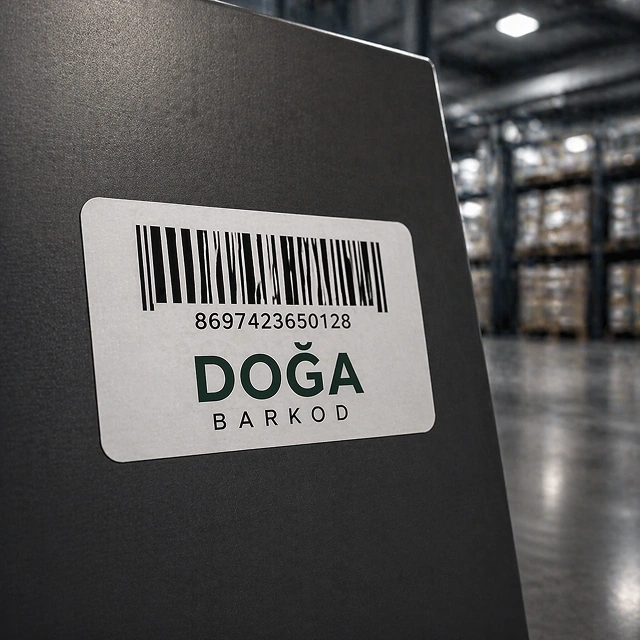
High-strength labels are a special type of label that maintains its durability for extended periods against extreme temperatures, humidity, chemical contact, and outdoor conditions. They are preferred in industrial equipment, automotive, machinery, and outdoor applications where standard labels are insufficient.
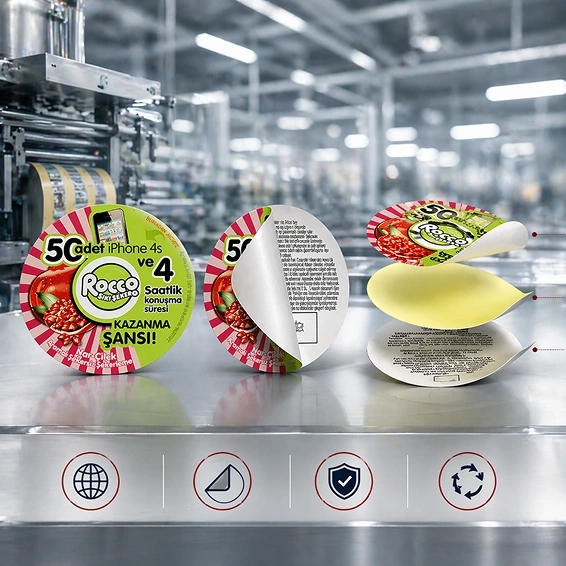
Multi-layer labels are a type of label that contains multiple layers, with the top layer being peel-off. They are used to present information in multiple languages on a single package, add detailed usage instructions, or create promotional content. They are commonly preferred in export packaging for the pharmaceutical, food, and cosmetics industries.
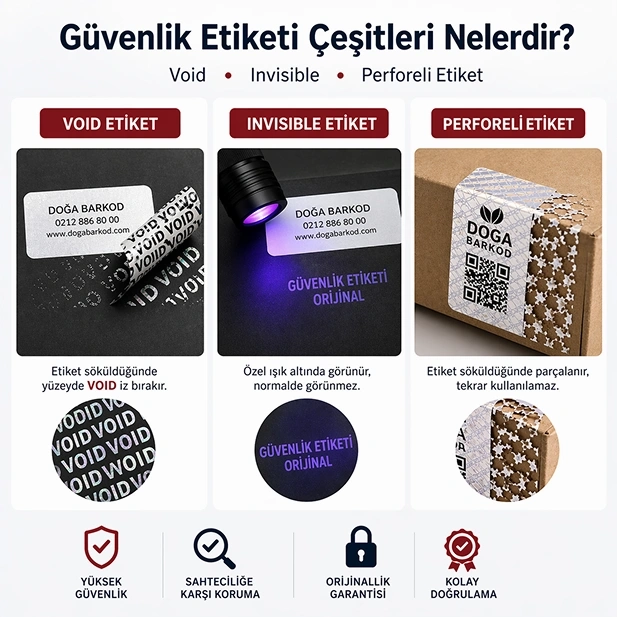
A security label is a special type of label that indicates that a product or packaging has been tampered with, opened, or counterfeited. There are various types offering different levels of security, including void, invisible, perforated, fragile, and holographic labels. They are used to ensure product safety in the pharmaceutical, cosmetics, electronics, and food industries.
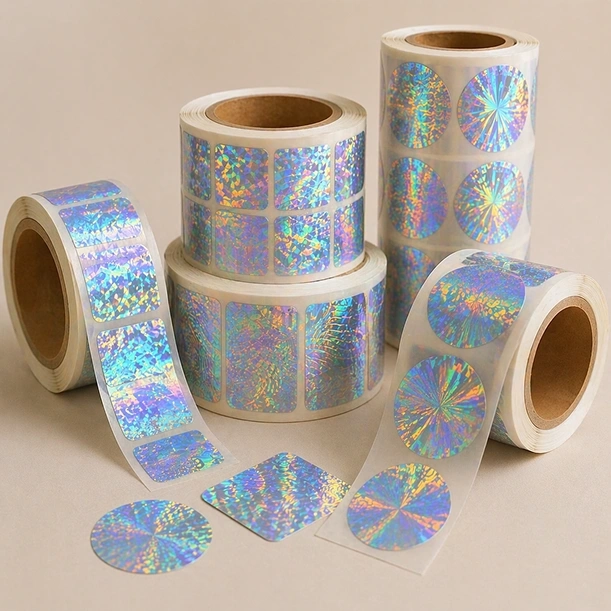
Hologram labels are security labels that feature a holographic effect that changes color in three dimensions under light. They provide visual verification against counterfeiting and product copying. They are used to guarantee product safety in the pharmaceutical, cosmetics, electronics, and premium food industries.
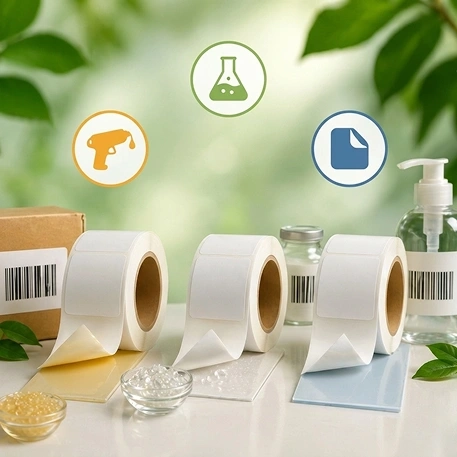
Adhesive label glue types are classified as hotmelt, acrylic, nonpermanent (removable), freezer-freeze, and re-adhesive glues. The correct glue selection is determined by the product's usage conditions, surface type, and temperature requirements.
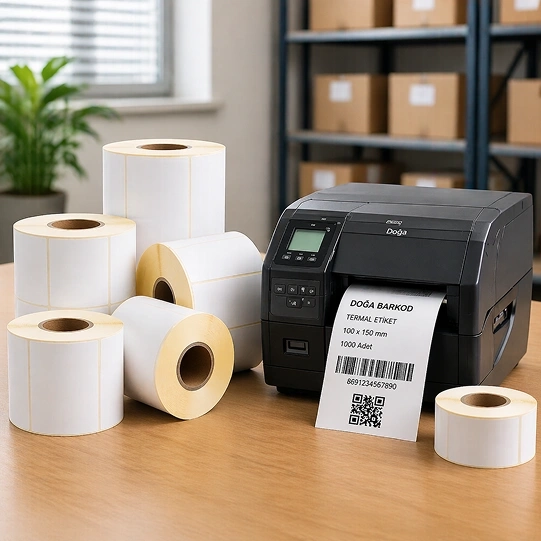
Thermal labels are a type of label that contains a special heat-sensitive coating and can be printed with thermal printers without the need for ink. They are widely used in logistics, warehousing, shipping, and retail sectors for printing barcodes, QR codes, and variable data.
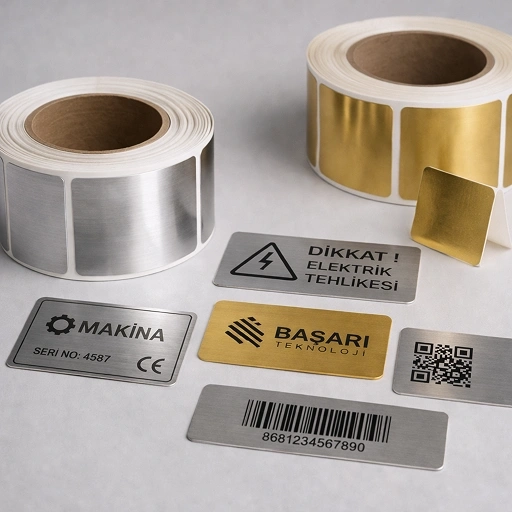
Metallic labels are a type of label made from special materials containing aluminum or metallic coatings, offering a bright and premium appearance. They are preferred in cosmetics, perfumes, olive oil, and industrial products to enhance brand value. Thanks to their waterproof structure, they are resistant to moisture and oil.
