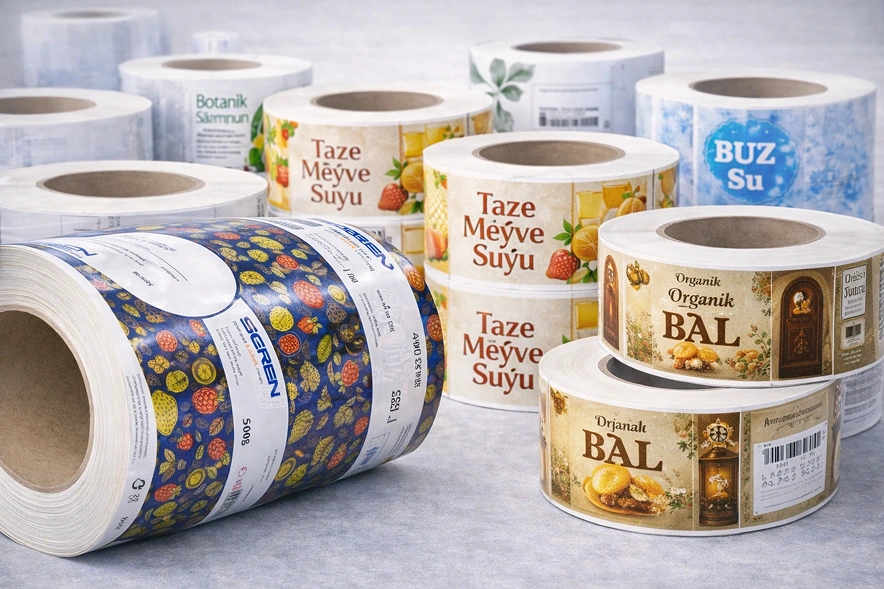
Factors to consider when ordering labels include material selection, minimum order quantity, print quality, delivery time, and price. Choosing the right label company should be based on factors such as production capacity, certifications, and references.
The minimum order quantity varies depending on the printing method. Flexographic printing generally has a higher minimum quantity due to the cost of the printing plate. Digital printing, however, does not require a printing plate, making lower quantity orders more economical. Digital printing should be preferred for prototypes, test products, or seasonal items.
| Printing Method | Minimum Quantity | Optimal Use |
|---|---|---|
| Digital Printing | Low quantity | Prototype, test, seasonal product |
| Flexographic Printing | High quantity | Mass production, long print run |
Yes. It is recommended to request samples for print and material approval before proceeding with mass production. This stage is critical to verifying color accuracy and material quality.
Digital printing doesn't require molds, so urgent orders can be fulfilled faster. Flexographic printing, however, requires careful consideration of mold preparation time.
Some label companies offer design support. However, for a design that aligns with your brand identity, it's recommended to seek professional graphic design assistance. You can submit your ready-made design file in PDF or AI format.
In high-volume orders, the unit cost decreases, but inventory risk increases. In situations where product information changes frequently, low-volume and frequent orders may be more advantageous.
As Doğa Barkod Etiket, we produce labels for the food, cosmetics, pharmaceutical, and industrial sectors with our ISO 22000 and ISO 9001 certifications. With our flexographic and digital printing capabilities, we can handle both low and high volume orders. You can visit our contact page to get a quote or browse our adhesive label products.
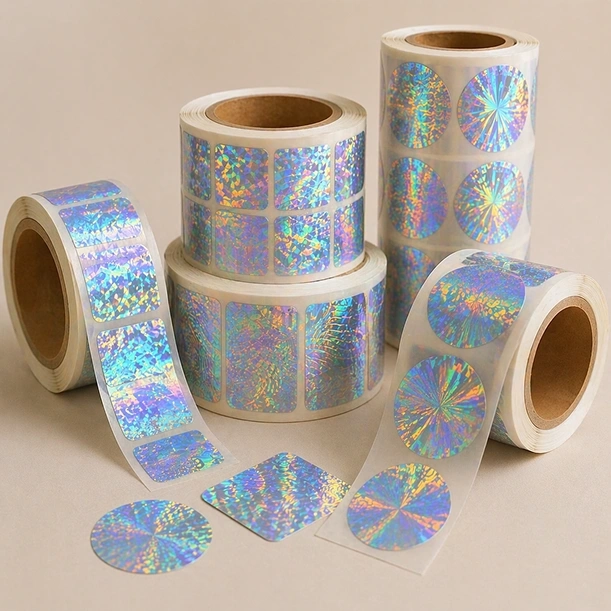
Hologram labels are security labels that feature a holographic effect that changes color in three dimensions under light. They provide visual verification against counterfeiting...

Adhesive label glue types are classified as hotmelt, acrylic, nonpermanent (removable), freezer-freeze, and re-adhesive glues. The correct glue selection is determined by the pr...
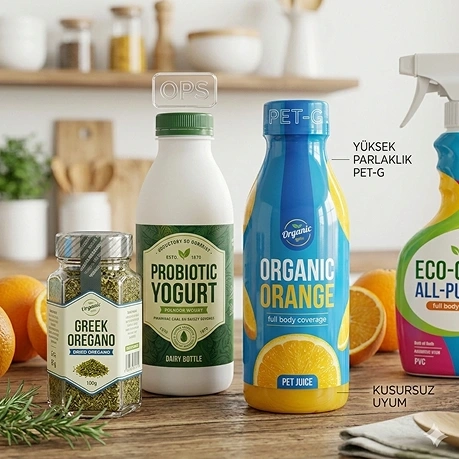
Shrink sleeve labels are packaging labels that conform perfectly to the product shape through heat application and offer a 360-degree printing area. They are produced from three...
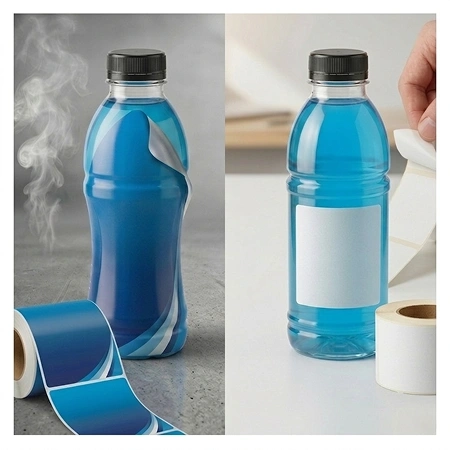
Shrink sleeve labels are a packaging solution that conforms to the product shape using heat and offers a 360-degree printing area. Adhesive labels, on the other hand, are a trad...
