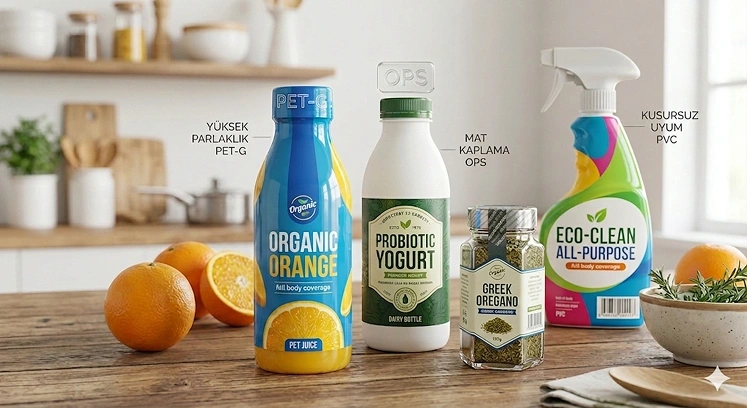
Shrink sleeve labels are packaging labels that conform perfectly to the product shape through heat application and offer a 360-degree printing area. They are produced from three different materials: PVC, PET-G, and OPS. Each material has a different shrinkage rate, durability, and environmentally friendly properties.
Shrink sleeve labels are first printed onto a special film material, which is then formed into a tube. This material is then placed over the product and shrunk to the product's shape using a heat tunnel. Material selection directly impacts the quality of the final product.
| Feature | PVC | PET-G | OPS |
|---|---|---|---|
| Shrinkage rate | Up to 70% | Up to 78% | Up to 65% |
| Environmentally friendly | No | Yes, it is recyclable. | Partial |
| Print quality | Good | Very good | Good |
| Cost | Economic | Middle | Economic |
| Heat resistance | Middle | High | Low |
| The sector where it is most used | Beverages, cosmetics | Food, beverages, cosmetics | Food, cleaning |
PVC is the most economical shrink sleeve material. It has a high shrinkage rate and easily conforms to complex shapes. PVC can be preferred if budget is a priority and environmentally friendly certification is not required. It is widely used in the beverage and cosmetics industries.
PET-G has the highest shrinkage rate and is a recyclable material. It is ideal for brands with sustainability goals and exporting companies. It offers the highest print quality and is particularly preferred in the food and beverage industry.
OPS is suitable for lightweight packaging due to its thin structure. It offers an economical alternative to PVC. Because of its low heat resistance, it is not used in hot-filled products. It is preferred for packaging food and cleaning products.
Shrink sleeve labels do not use adhesive; they are heat-formed to fit the product shape. They offer a 360-degree printing area. Adhesive labels, on the other hand, are applied directly to the surface and typically cover the front or back. For a detailed comparison, see [link to comparison page]. Shrink Sleeve or Adhesive Label? You can read our article.
Shrink sleeve labels made from PET-G material are recyclable. PVC, on the other hand, can create problems in recycling processes. If you aim for environmentally friendly packaging, PET-G should be preferred.
Minimum order quantities vary depending on the type of product and materials used. Please contact us for detailed information.
No. Heat tunneling is essential for shrink sleeve labels to fit the product perfectly. For production lines without heat tunnels, adhesive labels are a more suitable option.
At Doğa Barkod Etiket, we produce shrink sleeve labels in PVC, PET-G, and OPS materials. Serving leading food, beverage, and cosmetic brands in Turkey, our experienced team guides you in selecting the most suitable material for your product. You can review our shrink sleeve label page or contact us to request a quote.
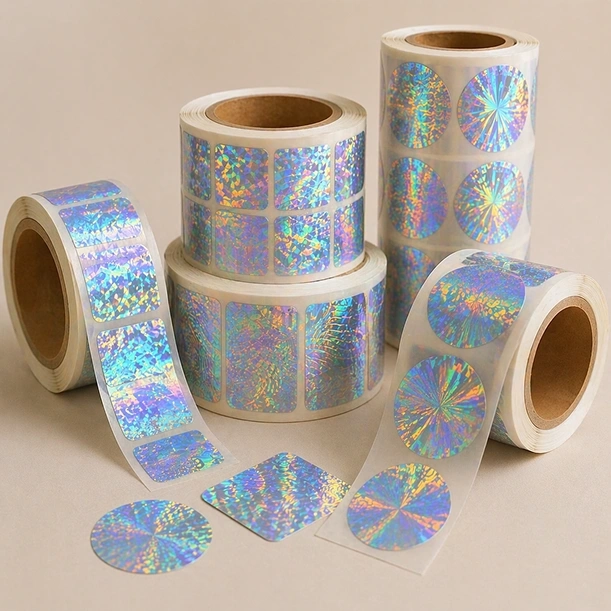
Hologram labels are security labels that feature a holographic effect that changes color in three dimensions under light. They provide visual verification against counterfeiting...
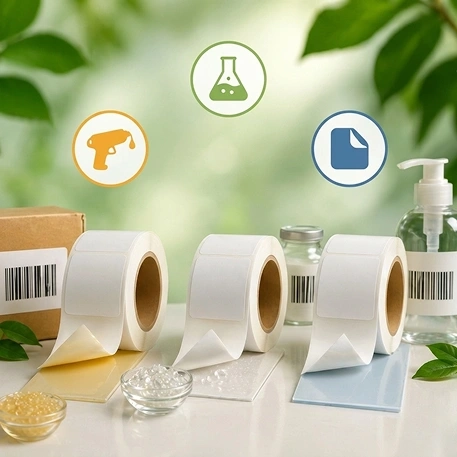
Adhesive label glue types are classified as hotmelt, acrylic, nonpermanent (removable), freezer-freeze, and re-adhesive glues. The correct glue selection is determined by the pr...
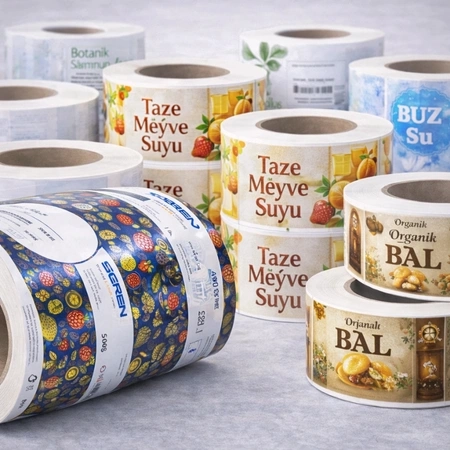
Factors to consider when ordering labels include material selection, minimum order quantity, print quality, delivery time, and price. Choosing the right label company should be ...
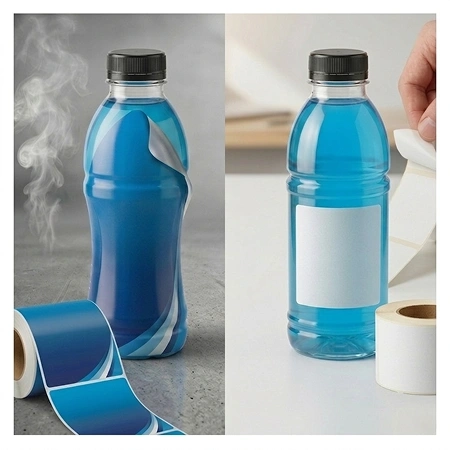
Shrink sleeve labels are a packaging solution that conforms to the product shape using heat and offers a 360-degree printing area. Adhesive labels, on the other hand, are a trad...
